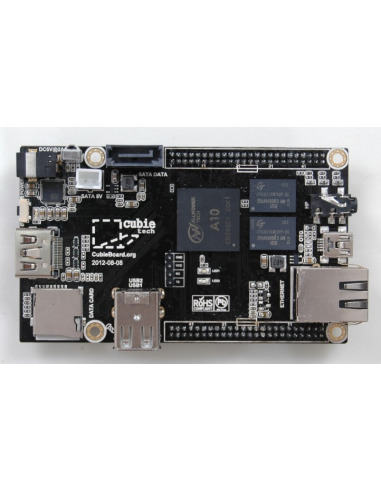
Cubieboard 2 — Full Technical Description
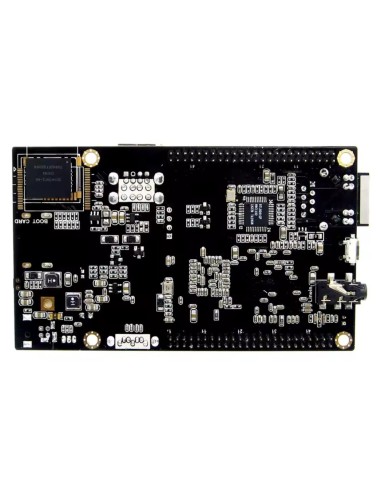
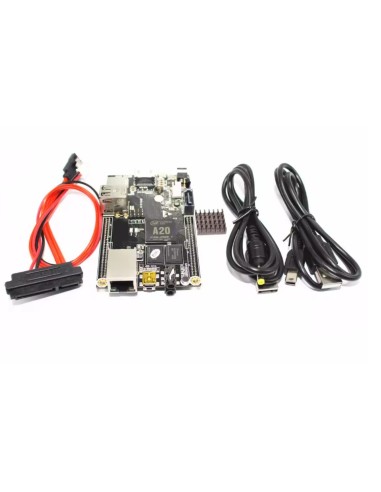
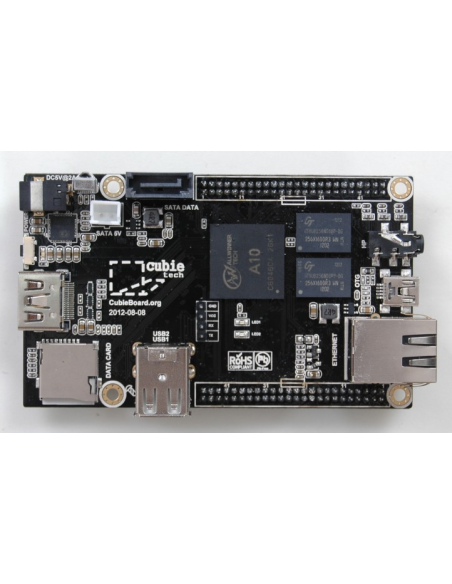
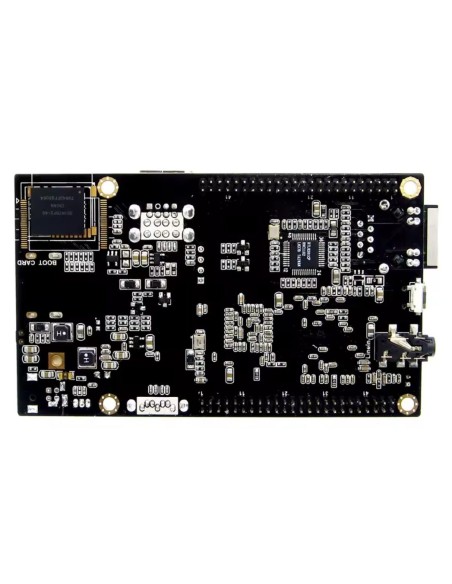
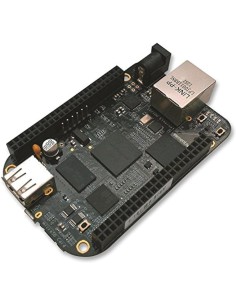
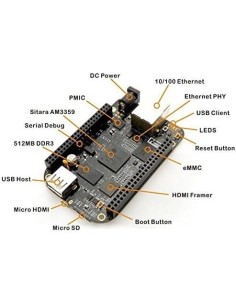
The Cubieboard 2 is a compact single‑board computer based on the Allwinner A20, designed for embedded systems, DIY projects, servers, and multimedia applications. It offers a rich set of peripherals, SATA support, and a GPIO header for hardware expansion.
🔥 1. Processor (CPU)
Allwinner A20 SoC
- Dual‑core ARM Cortex‑A7
- Clock speed: 1.0 GHz
- Architecture: ARMv7‑A (32‑bit)
- NEON SIMD support
- VFPv4 floating‑point unit
- Low power consumption
🎨 2. Graphics (GPU)
Mali‑400 MP2
- Dual‑core GPU
- OpenGL ES 2.0 support
- Capable of 1080p UI acceleration and light 3D graphics
🎥 3. Video Engine
CedarX VPU
- Hardware decoding: 1080p H.264, MPEG‑4, VP8
- Hardware encoding: 720p H.264
- HDMI output up to 1080p
🧠 4. Memory
- 1 GB DDR3 RAM (standard model)
- Some rare versions shipped with 512 MB
💾 5. Storage Options
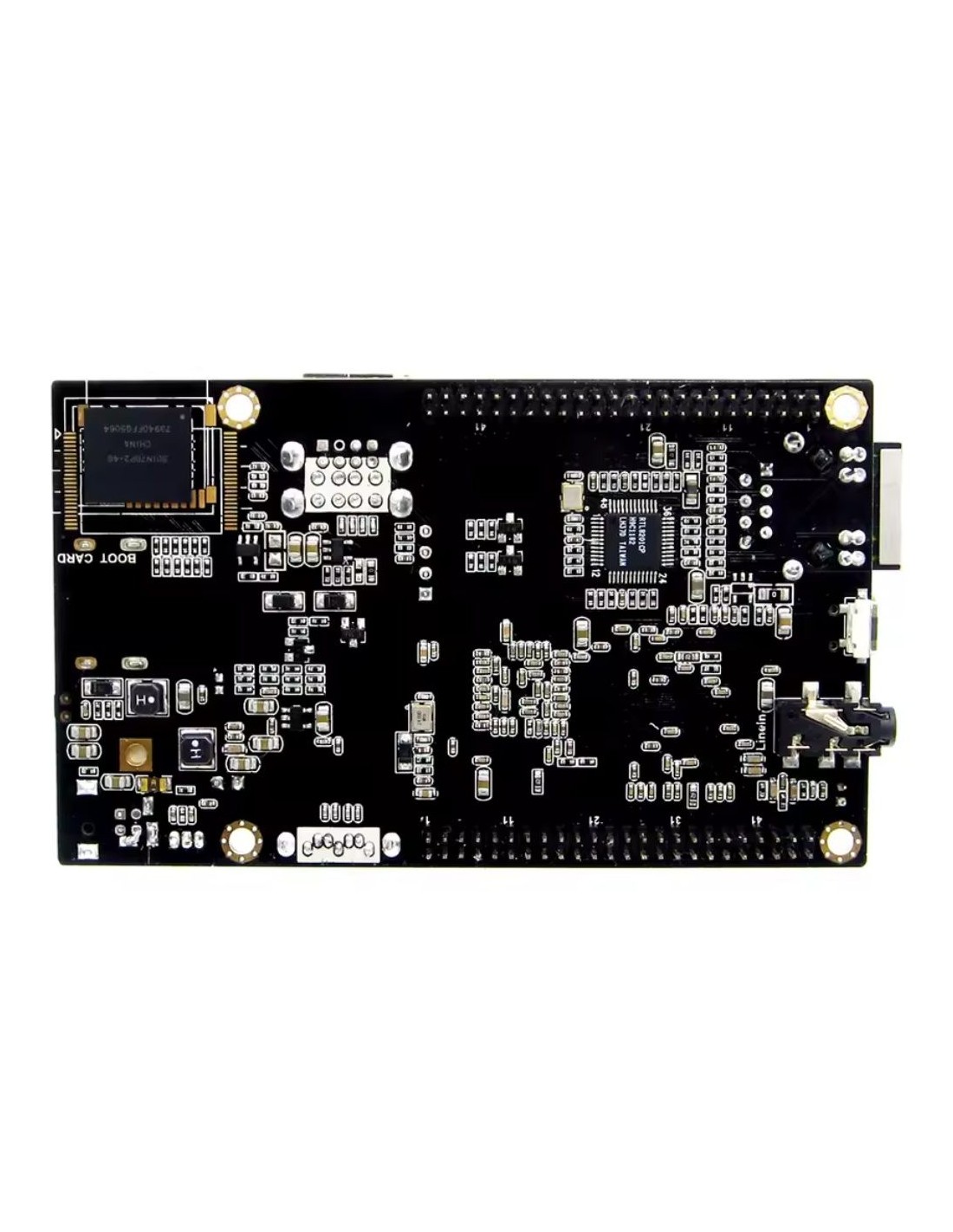
- microSD slot (bootable)
- NAND flash (varies by batch; some units have 4 GB)
- SATA 2.0 port
- Up to 3 Gbps
- Supports 2.5" HDD/SSD
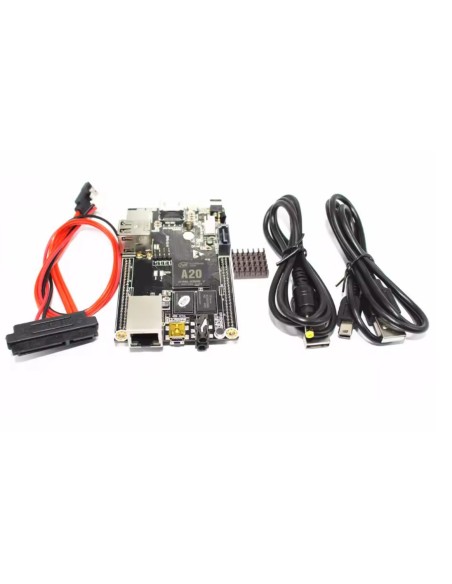
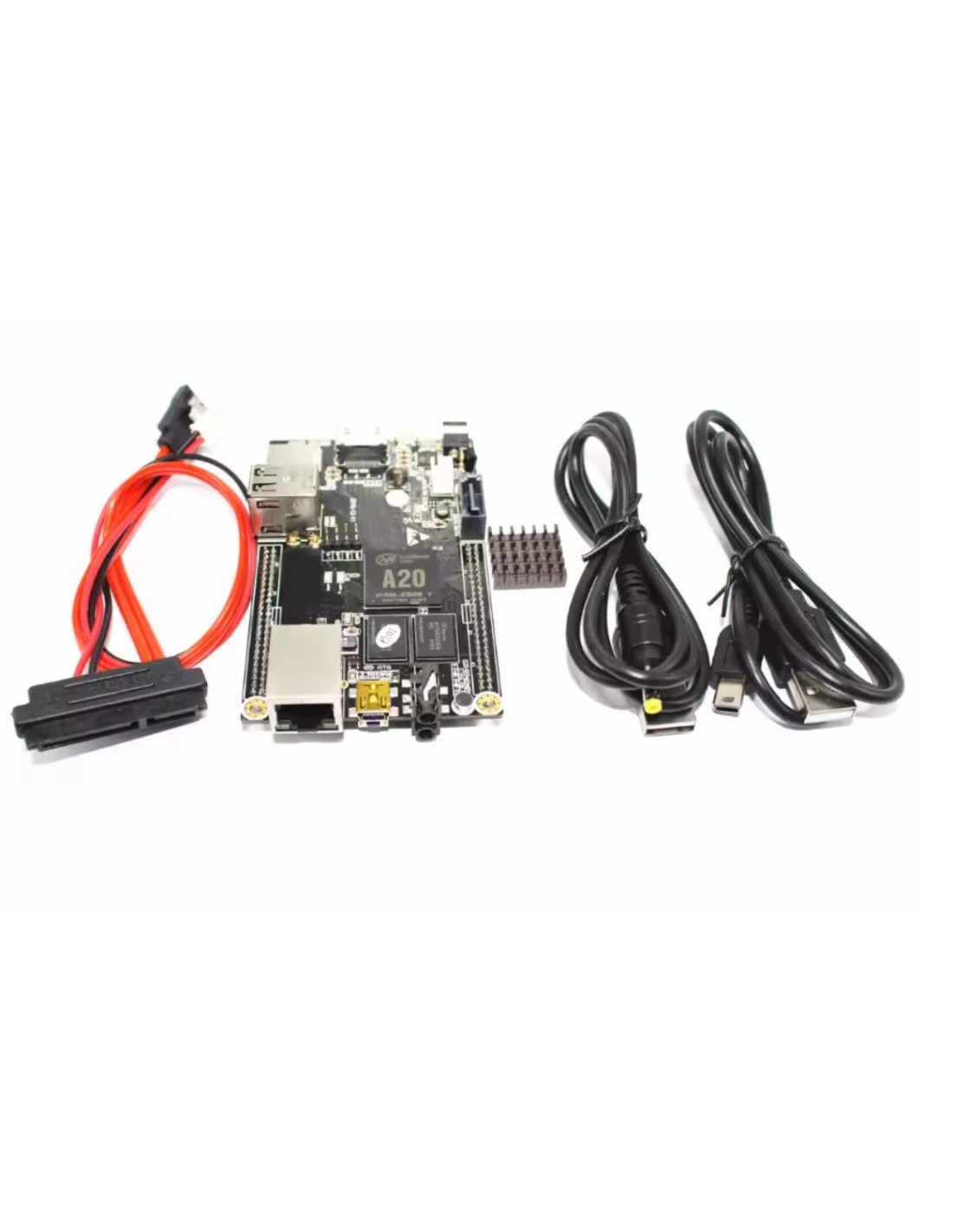
- Includes SATA power cable in the kit
🔌 6. Connectivity & Ports
USB
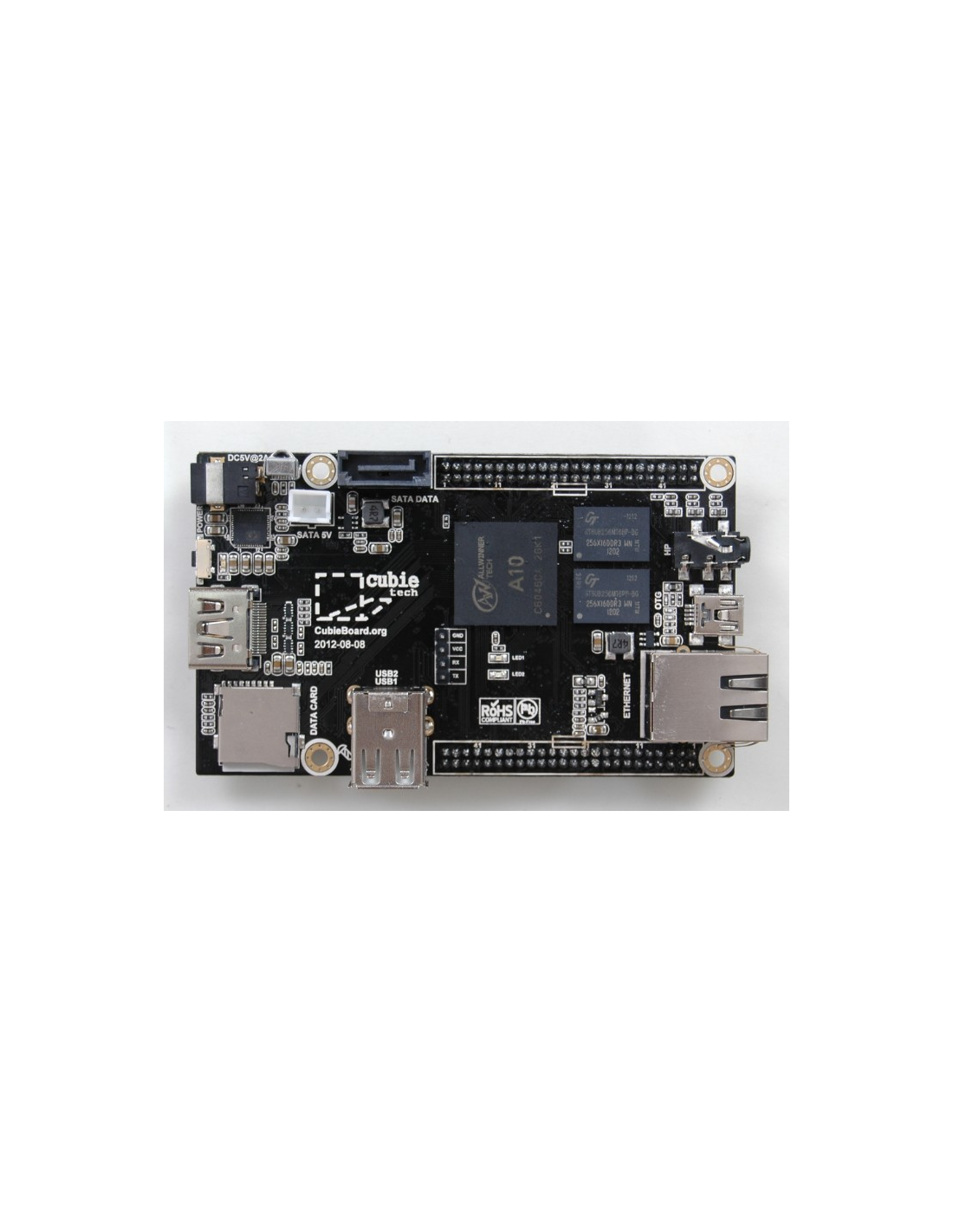
- 2 × USB 2.0 Host ports
- 1 × USB OTG (micro‑USB)
Ethernet
- 10/100 Mbps Fast Ethernet
HDMI
- HDMI 1.4
- Up to 1080p output
Audio
- 3.5 mm audio out
- 3.5 mm microphone in
- SPDIF digital audio output
IR Receiver
- Built‑in infrared receiver for remote control
🧩 7. Expansion Header (GPIO)
The Cubieboard 2 exposes a 96‑pin expansion header, including:
- GPIO
- UART
- I²C
- SPI
- PWM
- LRADC
- TV‑out
- CSI camera interface
- LCD RGB interface
- I²S audio
This makes it extremely flexible for embedded projects.
📡 8. Networking
- Fast Ethernet 100 Mbps
- No onboard Wi‑Fi (USB Wi‑Fi dongles supported)
🔋 9. Power
- 5V DC input (via barrel jack or USB OTG)
- Typical consumption: 2–4 W
🧱 10. Physical Characteristics
- Dimensions: 110 × 80 mm
- PCB color: black (in your kit)
- Mounting holes: 4
The Cubieboard 2 is a versatile SBC with:
- Dual‑core A20 CPU
- SATA support
- HDMI 1080p
- Rich GPIO
- USB host + OTG
- Audio in/out
- IR receiver
- microSD + NAND storage
It’s still useful today for:
- NAS
- Retro gaming
- Lightweight servers
- GPIO projects
- Linux learning
- Home automation